Before talking about the "four spies", let's straighten up the Russian ambassador conspiracy crap, that would make a historian do a Japanese style seppuku.
Jung Chang and Jon Halliday had a Russian conspiracy theory in stating that Chiang Kai-shek's top general Zhang Zhizhong, a Russian mole, had provoked the Sino-Japanese War in Shanghai on Aug 9th, 1937. This is Jung Chang's rash conclusion that is similar to the unfounded claim of sabotaged Comintern telegraph set in Shanghai in 1934, or another sense, a commercialization attempt for stirring up interest in her book.
Jung Chang mixed up two Russian ambassadors, from 1937 and 1938, respectively, to make up the Zhang Zhizhong conspiracy. The Russian killed in car accident near Moscow was a guy who stationed in Chinese Turkistan before being sent to Wuhan in 1938, not the one in 1937.
The Sino-Japanese War officially started on July 11th, 1937. The fallacy of this theory would be to make Japanese cry "foul play" in a revisionist schooltext environment.
Before the Xi'an Coup of December 12th, 1936, Stalin was playing the trick of settling with Chiang Kai-shek over the matter of two different terms, namely, a half-basket settlement between the U.S.S.R and the Republic of China or a one-basket settlement between the U.S.S.R/Chinese communists and the Republic of China.
The Soviets, using the French fellow-travelers and the pro-communist Chinese exiles in Europe, passed on the wish to strike a security treaty from 1936 onward.
Soviet ambassador Bogomolov, wary of pro-Japan Chinese foreign minister Zhang Qun, worked unofficially towards this end, for which Bogomolov was recalled to the Soviet Union for execution after the eruption of war.
Chiang Kai-shek, being wary of the Soviets' playing the game, had Zhang Qun send a message to Wellington Koo for probing with the Soviet diplomatic staff in Europe as to Bogomolov's true intent in selling a Sino-Soviet security scheme to the non-foreign ministry R.O.C. officials, and forfeited a chance to strike a military-nature alliance with the Soviet Union, when Stalin was paranoid about Japan's possible attack at Siberia.
Even after the Xi'an coup and one month before the July 7th Marco Polo Bridge Incident, ambassador Dmitry Vasilyevich Bogomolov (1890-1937), working with new Chinese foreign minister Wang Chonghui, expressed wish to conclude a Soviet-China mutual security treaty, rather a non-aggression treaty, after an ambiguous condition that the venue to strike a pan-Pacific-rim security treaty (including France, Britain and the U.S.) was to be exhausted, with a detailed suggestion that China was to make the proposal to the powers for convening such a meeting.
This is the notorious ambassador Bogomolov proposal of June 5th, 1937, for which ambassador Bogomolov was executed as Stalin's scapegoat.
The enticement of striking a security treaty with China was a mere attempt at deflecting the possibility of China's joining the anti-Comintern Pact, i.e., Japan's No. 1 demand in the terms of peace in addition to acknowledgement of the puppet Manchukuo's independence;
and that once China was in the war with Japan, Bogomolov's mission or usefulness was over.
Bogomolov actually had Stalin's personal mandate whereas the rest of the Soviet diplomatic corps were not in the know and hence conveyed conflicting opinions.
After the eruption of war, Bogomolov was prohibited from talking about security or alliance treaty, and was soon recalled for execution -- which was a slap on Jung Chang and her British husband's purportedly scholarly research that Bogomolov was executed for protecting the 'communist' identity of General Zhang Zhizhong as the duo were responsible for provoking the Shanghai war as a second front.)
Now the "four spies".
Jung Chang called four names, i.e., Zhang Zhizhong, Shao Lizi, Hu Zongnan and Wei Lihuang, as communist spies.
She was right on Wei Lihuang.
As numerous people recalled in their memoirs, Zhang Zhizhong appeared to be the only person daring to call Chiang Kai-shek by "Mr. Chiang" in post-1949 Communist China.
However, Zhang Zhizhong, taking himself to be an erudite, repeatedly fell short of expectations. At the Battle of Shanghai in 1937, Zhang rode on a bike to the front to avoid the
Japanese plane bombing, and later found an excuse to go to the hind to report to Chiang Kai-shek while people were looking for him at the front, which led to a rebuke from Chiang Kai-shek over the phone.
Zhang then further had the dereliction of duty while being empowered as chair of Hunan Province, under whose jurisdiction the scorched-earth policy was mal-executed in Changsha.
However, we could not blame Zhang Zhizhong 100% for his being blindsided by the communist propaganda. The agriculturalist Liang Su-ming, i.e., China's last Confucian, for another example, was
hoodwinked by the communists even though he himself walked across Japan-occupied territories to have witnessed the communist brigands' killing of his student-disciples who were waging the
guerrilla war against the Japanese behind the enemy's line.
(Yang Xiufeng, an Europe/Moscow-returnee who later in 1947/8 ran the communist People's University to vivisect the live government army captives
[including
one young Burma Battle veteran who walked to the west from coastal Zhejiang as a teenager during the 1937 China's Dunkirk Retreat
and did not return home to see his mother for next 12 years],
was one such most notorious dupe who in 1935 returned to China to instigate the anti-government activities in Tientsin, took advantage of the Ho-Umezu Agreement to rebuild the communist cells in North China,
and from 1937 onward was responsible for the communist administration in the Japan-occupied territories of North China. Unfortunately for numerous R.O.C. officials and officers,
their cognizance of the monstrous nature of the communists and communism came too late, often at the time of massive executions in the 1950s.)
This webmaster had added some lines about what disputes with Jung Chang were about at
http://www.chinahistoryforum.com/index.php?/topic/36274-the-fate-of-kmt-members-after-1949/
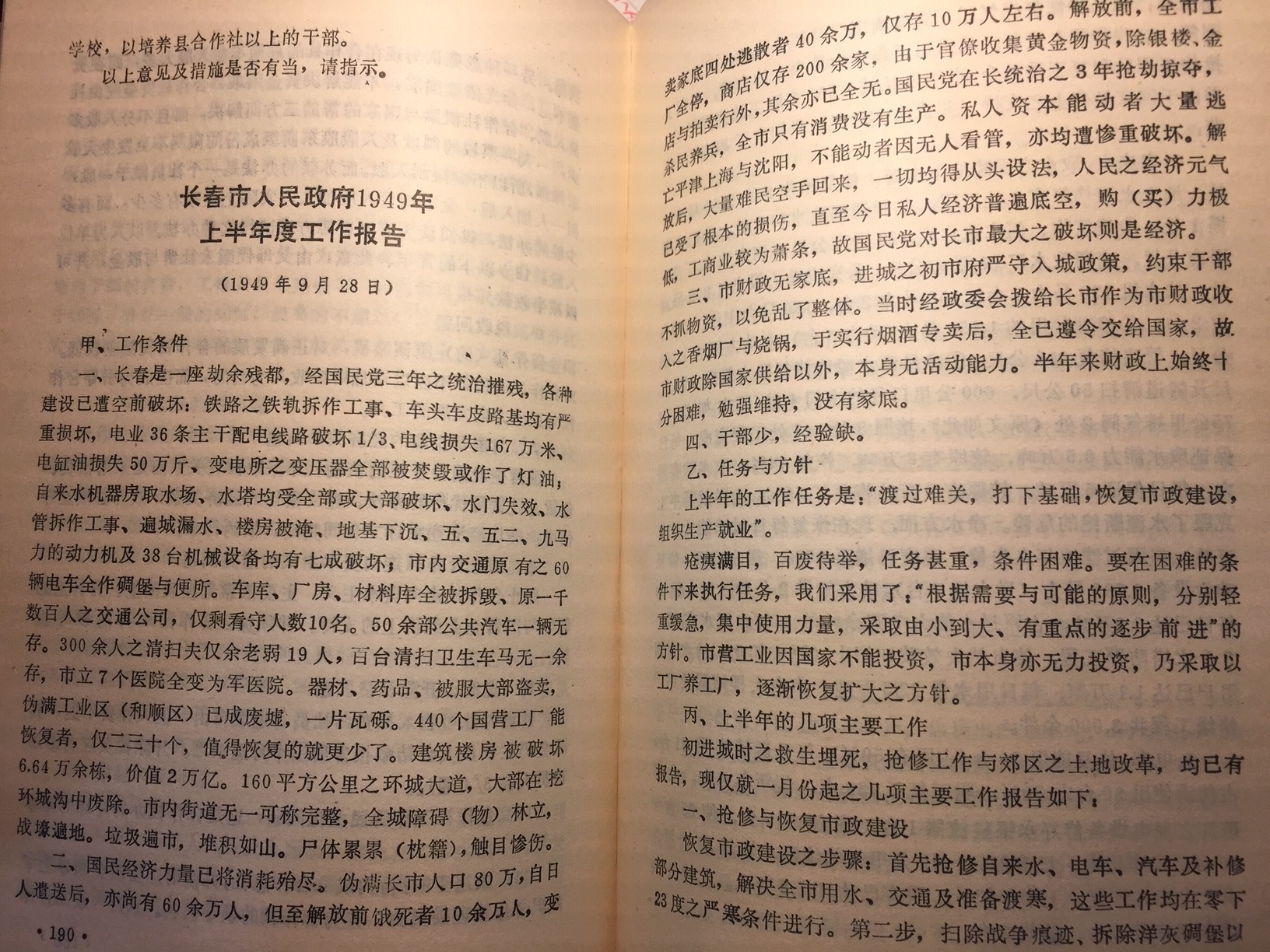
It was not about Zhang Zhizhong's propensity to or sympathy with the communists, but about her fabricating the Soviet connection. What she said was that Zhang Zhizhong "reported" to the Soviet ambassador and was ordered to provoke the August 13, 1937, Battle of Shanghai. That's a total b.s. and the most ludicrous crap this webmaster ever read among her accusation against Shao Lizi and Hu Zongnan, et al. This webmaster pointed out for years that Jung Chang was wrong in making up the conspiracy theory about Zhang Zhizhong and the purported Soviet coverup operation to kill the ambassador in a staged car accident near Moscow. What this webmaster said was that Jung Chang mixed up two Soviet ambassadors, the 1937 one, and the 1938 one. There are several books about this car accident involving the 1938 ambassador, but they were mostly wrong as well. Like Jung Chang, most recollections done by the Chinese had mixed up the two Soviet ambassadors. The only guy who knew the difference was Wuhan mayor Wu Guozhen who personally ran into the new Soviet ambassador at the airport as a result of lack of pre-announcement from the Soviets. It was this 1938 Soviet ambassador who was ordered by Stalin to be assassinated via a staged car accident. And this car accident was what most of the old-time Chinese talked about, not the purge death of the 1937 Soviet ambassador - who died in a prison. Only one person pointed out that the car accident was staged, and that's Ledovsky. None of the old-time Chinese would have the intelligence to know that the 1938 ambassador who was killed in the car accident near Moscow was staged, as none of those Chinese would have understood the inner workings of Stalin's police state. Why the old-time Chinese had some fond thoughts about the 1938 Soviet ambassador? You need to go to Wu Guozhen's book to know that this new ambassador, who sat two storeys above the Soviet embassy O.G.P.U agents, had done quite a bit in expediting the Soviet military aids to Chiang Kai-shek. That's why the old-time Chinese regretted to know that the Soviet ambassador was killed in a car accident, and talked about it for 50-60 years, which Jung Chang picked up and then made it into a sensational story that this ambassador was killed to protect Zhang Zhizhong's Soviet mole status in China. This webmaster would say Holy Crap. No matter what, Jung Chang made tons of pounds and dollars using this crap.
Shao Lizi, who had the deepest connection with the leftist and communist writers since the 1920s, was accused by Jung Chang of being a Soviet mole who wrote a letter to Stalin to
express his indignation over the 1927 KMT-CCP split. This webmaster did not see or read that letter in its entirety. However, the take was that Shao Lizi was at best someone with sympathy for the communists
but was in no capacity to do harm to the Republic of China as the communist military spies did, nor did Shao Lizi ever harbor any communist spies under his helm as heavy-weight
'warlord' leaders at the national, provincial and regional levels did. Note in 1927, both Hu Hanmin and Shao Lizi attended the Soviet and Comintern congress at the invitation of the Soviets. The extrapolation on the death of Shao Lizi's son in Europe was a stretch at best, and could be said to
be an undue credit to the R.O.C. special agents' abilities to mount the overseas assassination operations,
where the Chinese Communists, in the shadow of British Communists, German Communists,
Belgian Communists and French Communists, took the prime stage in an overwhelming way.
The studs in Europe and the USA, who had French, British, German, Romanian, Polish and American wives, worked under the so-called "Chinese language bureaus" of the CPUSA, German communists, British communists, French communists and etc.
After Hitler cooperated with the communists in routing the German social democrats and subsequently expelled the communists, the European communists
still had strong presence in the rest of Europe and outside of Germany. In France, Gao Changhong, i.e., China's pioneer in the "Sturm und Drang" movement and Lu Xun's unknown enemy in love, easily connected with
the French Communist Party to become a member.
Even in Germany, the Chinese Communists often proactively brawled with R.O.C. embassy/consulate organizers, as recalled by Tang Zong, i.e., Chiang Kai-shek's attache.
It was in France where the Chinese overseas communists converged to lend aid to the Spanish Civil War at the order of the Comintern, for example.
Hu Zongnan's case could be dispelled with an understanding of his position among the Whampoa league.
Hu Zongnan, at one time during the 1936 Xi'an Coup, was having an argument
with fellow Whampoa cadet Guan Linzheng. The argument derived from Hu's attempt to rescue Chiang Kai-shek on his own accord,
while Guan Linzheng emphasized the point that
Chiang Kai-shek was not merely Hu Zongnan's commandant but his as well. Hu Zongnan's devotion to Chiang Kai-shek was undisputable.
This webmaster already scanned the page from the book on Hu Zongnan to show
that the friendship of Hu Zongnan with ex-communist Hu Gongmian was personal while
Hu Gongmian himself had severed relations from the communists a long time ago. Chiang Kai-shek, at the turn of the 1920s and 1930s, had a policy granting amnesty to
all Whampoa students who ever enrolled in the communist party. Huang Hongdi, a Moscow returnee and a Frunze military academy graduate, was
such an example of a communist Whampoa seeking pardon with Chiang Kai-shek, for which he was assassinated by the communists. Hu Zongnan himself, whenever catching the Red Army captives,
would inquire about the former Whampoa classmates who were in the Red Army camp, such as Cai Shenxi.
The Whampoa graduates were successful in winning over their communist classmates. One such Whampoa penetrated into Xu Jishen's Red Army to be an adviser
and instigated the defection of Xu Jishen, for which he, together with Xu Jishen, were all killed by the communists. Xu Jishen was attempting to take
the Red Army across the Yangtze when he was purged.
Throughout the early 1940s, Hu Zongnan repeatedly schemed to attack Yenan, but was not allowed to do so.
As disclosed by the Soviets, the Chinese communists, fearing the attack, resorted to the Russians to exert pressure on the Chinese government as far as retaliation against the communists was concerned. The communists had successfully bought over the troops
at the intersection of the North Yellow River Bend and the East Yellow River Bend, where they could cross the river at will to liaise with He Long's communist army
in northwestern Shanxi and the Soviets in Outer Mongolia, for trade in opium and weapons.
But the communists failed to move south towards Xi'an. When the communists attacked Hu Zongnan's army in late 1944 and early 1945, by taking advantage of the Japanese Ichigo Campaign and
the Japanese attack at Xixiakou, Hu Zongnan managed to beat them back. In 1945-1947, Hu Zongnan's army warred with the communist armies in southern and southwestern Shanxi repeatedly.
In 1947-1949, as this webmaster detailed in the civil war section, Hu Zongnan defeated Peng Dehuai and Chen Geng's communist armies in Shenxi-Shanxi provinces in numerous battles, holding the communist at bay.
Otherwise, the communists would have taken Xi'an back in 1945-46-47, not 1950.
To better understand China's warped history, you have to go to each and every battle to understand how Hu Zongnan defeated the communists and why the communists did not come into Xi'an in an earlier year.
It was not an arrangement between Hu Zongnan and the communists to hand over Xi'an in a certain year.
Wei Lihuang, a non-Whampoa, was a different story. Wei Lihuang, since 1937, was surrounded by the communists
who posed as progressive students and infiltrated into his army.
A non-Whampoa, Wei Lihuang from day one installed his Anhui natives in his army and did his best to exclude the Whampoa officers.
In the early 1930s, Wei Lihuang, for his defeating the Red Army in the Anhui-Henan-Hubei enclave, was rewarded with having his name designated to be a county name, i.e., Lihuang County.
The communists, in 1937-1938, infiltrated his camp by disguising as his Anhui natives through referral by the other Anhui natives. After the Battle of Taiyuan in 1937, Wei Lihuang was assigned
the task of defending southwestern Shanxi, and when retreating across the Yellow River, was invited into the communist territory of Yenan, where he first cohorted with the communist leadership
and apparently feeling flattered, Wei Lihuang made a decision to secretly transport the war zone's ammunition and weapons to the communist 8th Route Army and hence began the journey of
befriending the communists. During the 1939 upheavals in Shanxi, Hebei and Shandong, when the communists repeatedly routed the government and provincial troops and guerrilla armies plus the Red Spear Societies,
Wei Lihuang often put off Chiang Kai-shek's demand to confront the communists and gave the communists a free hand in attacking and routing the Shanxi New Army in a coup, and the government guerrilla armies at the tri-provincial area of Shanxi-Henan-Hebei.
At the end of WWII, Wei Lihuang was deprived of his posts and sent to Europe for a tour, where he connected with the European operators of the Chinese Communists.
As the Manchuria regional commander, Wei Lihuang refused to withdraw troops to China proper
but ordered the government troops to defending "points" (cities).
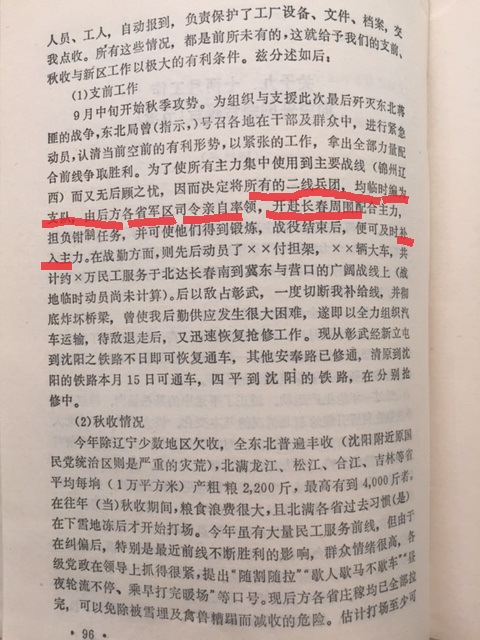
According to Ledvosky, and Shi Zhe's memoirs, the Soviet railway army corps stepped into China in 1948.
That was the determinant factor in the communist victory at the battle of Jinzhou, where 900+ artillery pieces were shipped over to blast the city to pieces.
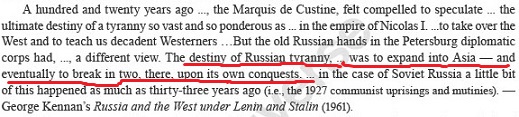
Alternatively speaking, the Soviet records actually meant that the Soviet military's intervening in the Chinese civil wars started from day one, by means of the cloak of secrecy under which the Soviets orchestrated the historical Soviet conquest of China to fulfill Stalin's mantle that pro-Soviet regimes must be established in all territories that the Soviet Red Army ever stepped on, no matter Europe or Asia; and that from 1948 onward, the Soviet military's intervening in the Chinese civil wars expanded beyond Manchuria into China proper.
Wei Lihuang synched up with Mao in ordering all R.O.C. troops to defend the cities, leaving the communists in control of the wilderness.
Nobody other than Mao knew the scheme. Communist commander Lin Biao did not know it either.
That's why Lin Biao, who was scared of the bloodbath in twice attacking Sipingjie, loitered between Sipingjie and Jinzhou for half a year,
till the Soviet artillery pieces were shipped over.
(Lin Biao, who had a secret meeting with government agents while talking peace in Chungking in 1945, had promised to Chiang Kai-shek to play some role in the future; and around 1947-8, Lin Biao, together with communist Whampoa pal Tao Zhu, had
received the visit of a retired Whampoa pal while in Manchuria, i.e., an agent sent by Chen Gongshu to instigate the two communist generals to defect to the side of the Whampoa commandant;
and it could be conceived that Lin Biao's loitering for half a year and claiming to Mao Tse-tung to change route to go to Jehol instead of Jinzhou, could have something
to do with the ongoing clandestine liaison with the government.
In 1950, Lin Biao again showed his cowardice in declining the job to go to Korea. Or in another sense, Lin Biao was really against Mao's disregard for the human life as Lin Biao correctly understood the firepower
of the United States army. In the initial years of the 1960s cultural revolution, Lin Biao and Tao Zhu purportedly sent a messenger to Taiwan to express wish to return to Chiang Kai-shek's side.
The rest of the story, i.e., Lin Biao's escaping towards the Soviet Union and crashing in Mongolia was a known story.)
|
|
 ***
***

![Though, Anna Wang [Anneliese Martens], in her memoirs, expressed jealousy over Gong Peng by stating that the Anglo-American reporters had flattered the Chinese communists and the communist movement as a result of being entranced with the goldfish-eye'ed personal assistant of Zhou Enlai](GongPeng.jpg)